It’s a Process…
I have come to realize that we let go of our loved ones little by little, day by day, not all at once. Holding on to their things might be a way of holding on to them for just a little longer. I needed to wear that old crocheted sweater a few more times, and hold that copper and brass crucifix, and look at those antique pink juice glasses in my own china cabinet. I needed to read her journals, as much as I could anyway, so I would understand more deeply who she was. I still have those things even though I don’t “need” them. Part of her is there, in those few possessions, so that part of her is here with me.
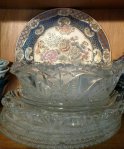
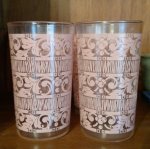
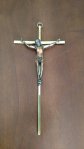
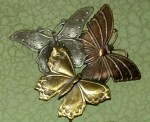
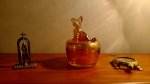
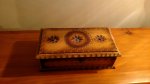
So, while we continue our personal purge, my mother’s things have merged with my things. The longer I have them, the less I need them. I will keep some of her stuff for a while longer, creating my own suffering in the name of my attachment to her. A “heavy duty” oak dining room set quickly becomes another thing to just donate somewhere. Her sweaters are still in a box in my storage shed, waiting for their next body to warm. All that crystal, and fake crystal, has yet to see the light of day in my house. I’m not sure if it will live here. I’m not ready to adopt it just yet. But I can’t just let it go, not just yet.
There are a few “things” that feel emotionally heavier than others. Those solid wood antique Colonial chairs that we sat in while we were growing up are still a slight burden to my heart. I’ve looked at them, sat in them, remembered the hot, sweaty nights in SC, eating chicken and canned vegetables, watching my father finish his dinner with cornbread and buttermilk topped off with raw green onions like it was chocolate cake. I waited for him so I could wash his dishes. He took his time.
Those chairs contain both safety and misery. Someone will use them one day, oblivious to the history that makes them seem more solid and substantial. I’ll let them go when my heart is ready. For now, they are in limbo with me and my broken memories.
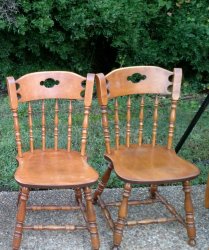
Attachment comes and goes. I keep reminding myself, it’s not the stuff that matters. It’s the memories. But sometimes it is the stuff that matters. I would not have had that memory without possessing those chairs. And now, I can let that memory go when I’m ready. Just like the chairs.
Saving and Purging
 Many years before she died, my mother gave me the responsibility of saving her writing. I said I would, being a writer myself. I did, mostly. She helped a lot of people with her Ezine articles on “starting over.” She became an expert on navigating the pain and emptiness of divorce and loss of a spouse. I saved those things, along with her “morning pages,” which must have helped her maintain her own sanity while helping others.
But I could not justify holding onto the poison she had allowed herself to swallow from the tv and the internet. She had become a victim of the fake news/us-and-them/op-ed media. I believe she was brainwashed into believing things she would have laughed at in her younger years. Facebook and Fox News kidnapped my mother and turned her into someone I did not know. She became even more fearful and negative and angry than I ever thought possible. It was the anger that disturbed me the most. She taught us to love and accept everyone, no matter the color of their skin or the country they came from. We are all immigrants, she told us. Yet, by the end of her life she was standing in line with those who wanted to “get rid” of all the “aliens” and “non-believers.” If I could’ve had one more conversation with her it would have been about this. My question would be, “What would Jesus do?” I don’t think she would have had an answer.
Purging her office was a way for me and my brothers to remove the mental torture from her life, even after her death. We needed to do that so we could remember who she really was underneath all that negativity. It was painful and exhilarating at the same time. There were countless bags of paper poison and negativity taken to the dumps–too toxic to recycle. Hopefully by now it has decomposed and merged with the mud and garbage that it always was anyway. We had been tip-toeing around her “collecting and saving” and worrying and warning for way too long. We needed this purge as much as she did.
No Worries, Finally
My mother taught me a lot of things–how to cook, clean, and sew as well as how to be a decent person in this world. Being the only girl, I always knew I had a place in the family. Being the oldest, I always knew I had to be the responsible one. So, I was. Confident and responsible.
My mother also taught me a few things that I had to unlearn. Like how to get my ego needs met by taking care of other people. This became a destructive tendency for me, but I was lucky enough to get it under control in my late 20’s. My mother never learned how to stop being the compulsive care-giver. It was as if she thought that was how she could get into heaven. She opened her home to anyone in the family who needed it. She cared for her friends at church and in her divorce care group. She would always listen to other people’s problems, and she always had some advice, appreciated or not. She knew that she knew how to help and could not help herself when someone else needed help. As I said earlier, she lost herself in all that caring.
Another lesson to be unlearned, still in progress–living in the past and the future. She had the twin curses of guilt and worry in abundance. I now know that guilt is about the past and worry is about the future. What about now? This is something I work on constantly, but a little progress makes a big difference in how you live your life. I refuse to ruminate on the past. I try to learn my lessons and move on. Concern for the future is my unwelcome inheritance from her. I don’t worry so much now but I do plan and dream, and I like to know what’s coming. But that’s me…I’m still here, and I still have an opportunity to grow and learn.
My mother seemed to have an actual “worry gene,” which she inherited from her mother and grandmother, and who knows how many others before her. As far back as I can remember, fear dominated my mother’s life. She could not turn it off. She worried about everything, even when she learned the Serenity Prayer, she never figured out that “wisdom to know the difference” part.
One of the first things we did when she was no longer aware was to disarm the alarm to the front door. She would have had a moat around the house, complete with crocodiles and a draw bridge if that sort of thing was possible. Instead she got an alarm system which we all understood but still complained about. She had barricaded herself inside her cluttered home with tv’s blaring in every room, computer always on, Facebook always notifying her that someone had posted yet another doom and gloom scenario. She could have used some therapy, but the opportunity never presented itself gracefully. So she suffered.
Wait. Where are we going?
I’ve taken a side road from attachment to this topic because I think it is related in a convoluted way. Fear is an attachment to safety and security. It is an assumption that things are predictable, that nothing changes unless you want it to. Nothing could be farther from the truth. Change is inevitable. Everything, every person, changes. It’s the nature of…nature. Without change we would shrivel up and die. The only thing constant is change. I think she might have told me that when I was young. All those alarms, all that clutter, all the noise from the television, that was there to keep her safe, free from danger, free from change. It didn’t work. Her resistance to change created profound suffering, for her and for us.
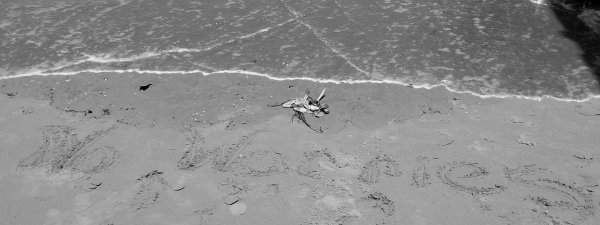
A couple days after she passed, my daughter and I went to the beach and made an “altar” for her. “No Worries,” was written in the sand, surrounded by seaweed and shells, and was eventually washed away. I hope she saw it and understood.
Death as the Great Stop Sign
 Attachment to stuff is one thing; attachment to people is something all together different and much more complex. We all have our roles in the family system. My mother was the second eldest of her siblings, the keeper of the important family belongings, as well as the moral thread that was woven generations ago before she was even born. She took this role seriously. She felt it was her duty to teach us how to be better humans and she had an undeniable impact on us and her community.
In May of this year, (2018) at the age of 81, she left us and her responsibilities behind. It was fast and shocking to us all. She wasn’t in great health, but she also wasn’t on death’s doorstep. She had plenty of aches and pains and unexplained body issues. But her spirit was strong and determined. She was profoundly disappointed in the state of world affairs and carried her fear of the future around with her everywhere. Life in general had become a struggle.
On Good Friday she had a stroke. Within weeks she lost her ability to speak coherently. Her thoughts became jumbled and frustrating, and eventually she stopped trying to communicate verbally. She has always been a fearful person, but now she could not express those fears, so we had to read her facial expressions and body language. We all got a crash course in empathy, like it or not.
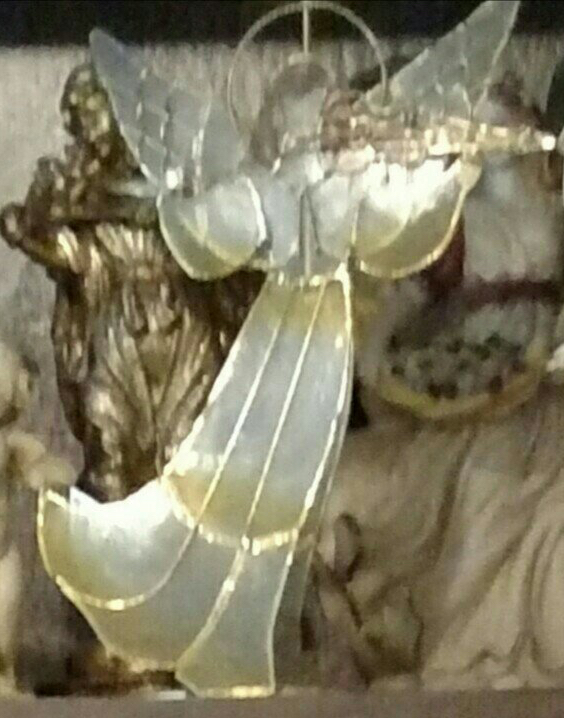
Six weeks after the stroke, she took her last breath, peacefully, at home, surrounded by all her angels and family members. When a person dies, those closest to them realize how important they were, and what a big hole they left. My mother was described (by her sister) as the “hub of the wheel,” both of her family and in her church. She was a driving force in many people’s journeys toward happiness and self-awareness. She was always ready to listen and offer advice. She cared. But she lost herself in that caring. She ignored her own needs and focused on everyone else as if her life depended on it.
Finally, in those last few days, as her body shut down, she seemed to find her way back to her deepest self. Her face relaxed, her skin softened, her eyes looked beyond what was in front of her. She became less interested in what was happening here on Earth. I imagine she spent most of her last days praying, talking to God, and waiting to be reunited with her loved ones.
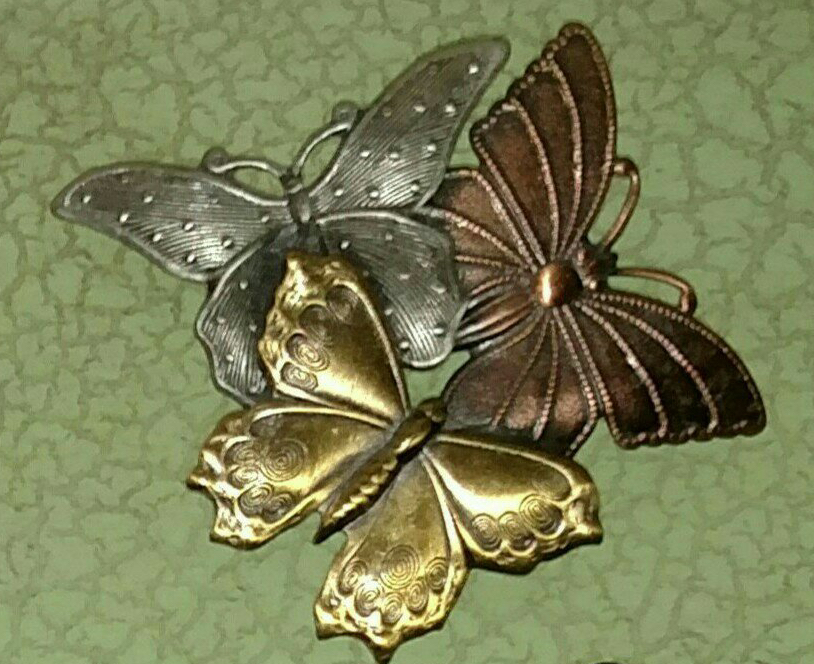
We sat with her and watched as she gracefully raised her hands up into the air, as if she could see the cloud-lined pathway into Heaven. She had angels and butterflies all over her house—paintings, ceramic statues, wind chimes, pins and pendants, and hundreds of cards with pictures of delicate winged creatures: angels and fairies and butterflies. They represented freedom and new life to her. We made sure to put as many of these symbolic images near her bed as we could so she would be comforted. In the end, they all came alive and welcomed her into her version of Heaven. Finally, the suffering was over. No more fear. No more worries. No more danger. She was finally free of her attachments to this world.
And we were left with our unfinished thoughts and conversations, and with a house full of memories and things. As her life on this earth came to an end, our journey through what was left of her had just begun.
*****
Attachment: A Small Whisper in the Ear
I’m sure I’ve said this before, but downsizing is a good lesson in attachment. After giving up all his worldly belongings and heading to the forest to seek enlightenment, the Buddha concluded that attachment is the #1 cause of suffering. (Actually, it’s ignorance of attachment that is the cause, but that gets complicated.) Basically, the more we get, the more we want. Enough is never enough, until you realize that it is. Then you enter a different phase of suffering—freeing yourself from all your attachments. This is an ongoing process for us humans as we get older and wiser, and realize how little we need to be happy.
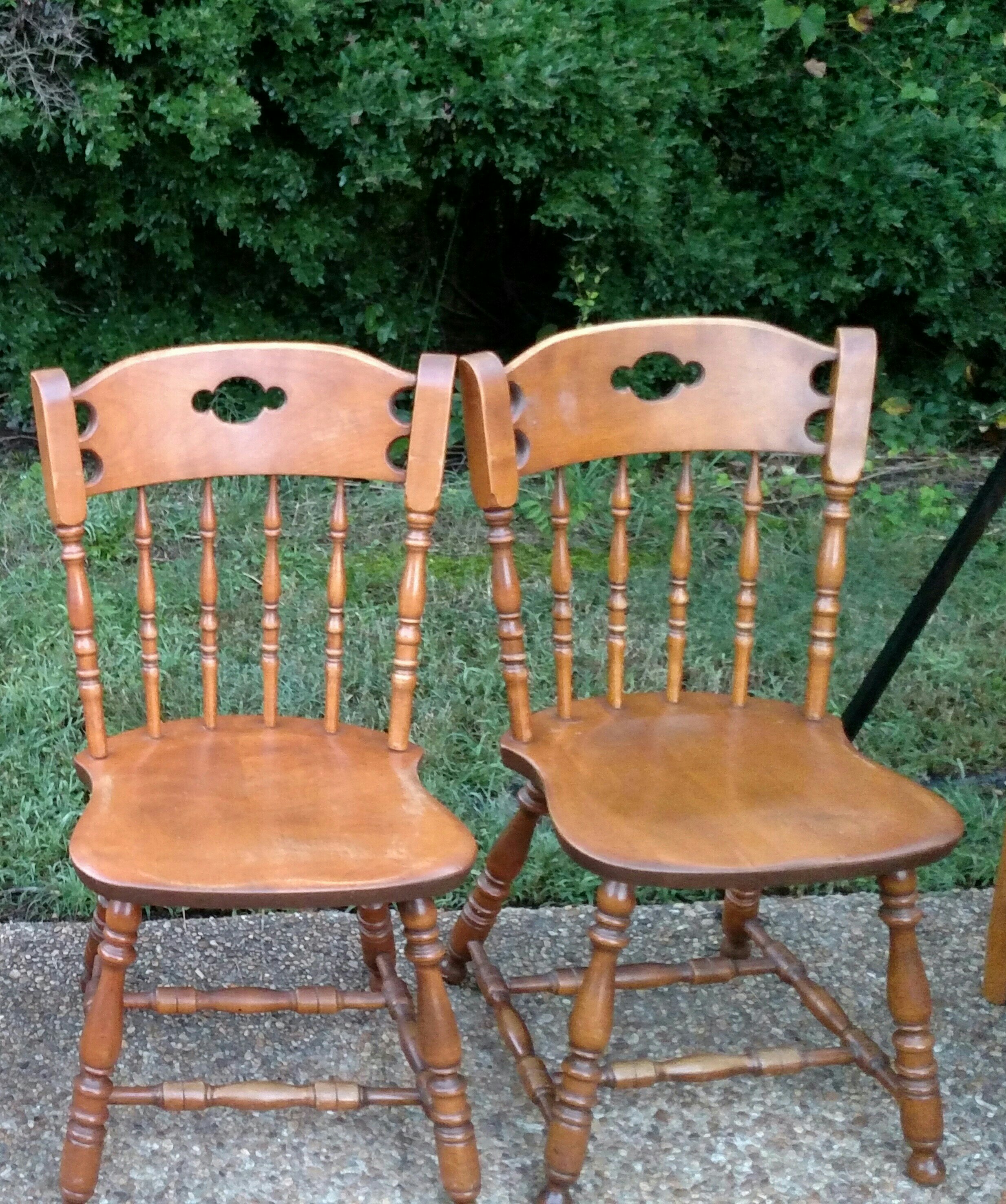
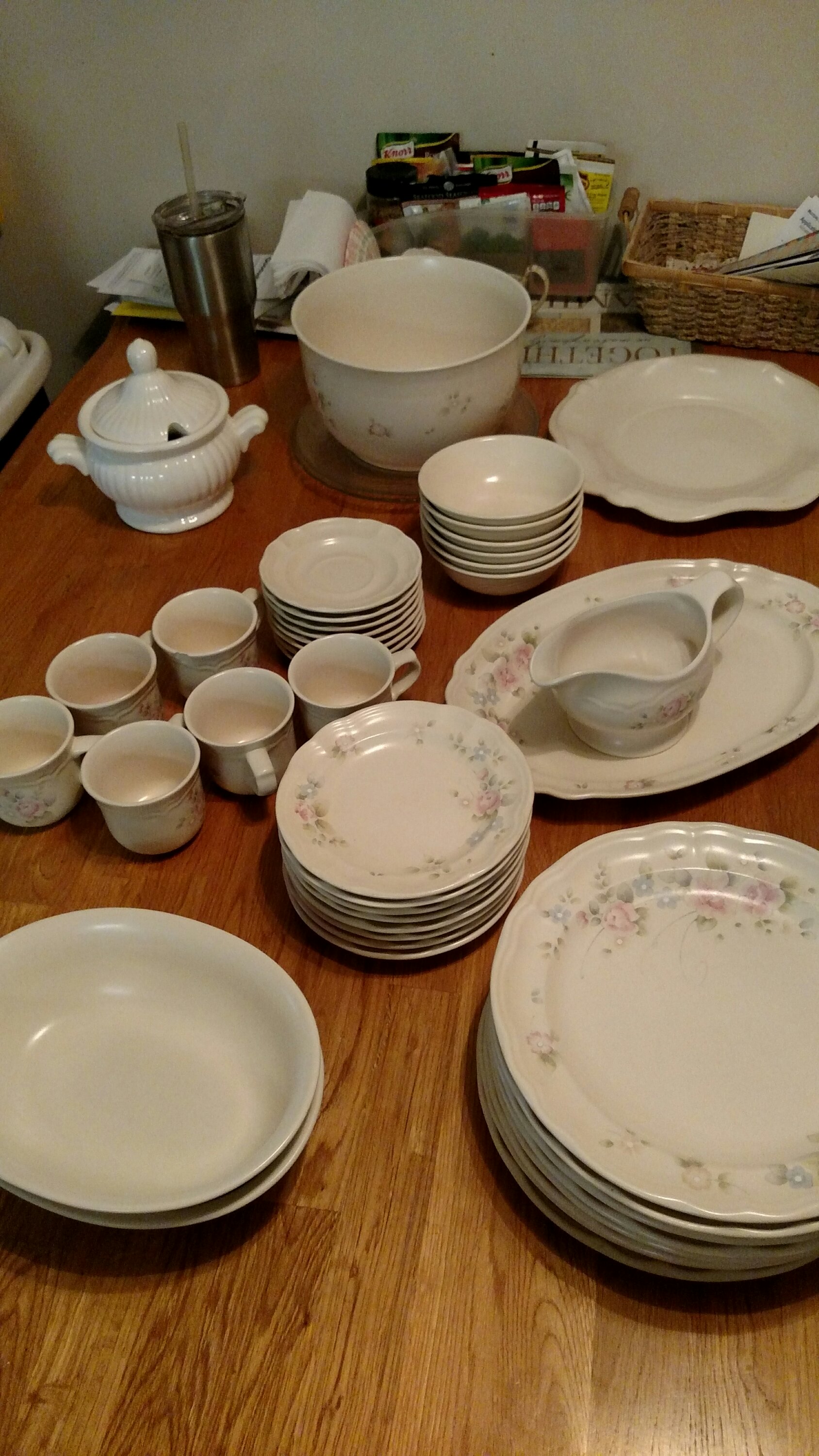
As a person living in this world who understands attachment, still I am convinced that someone will want this table or that set of dishes, or those antique chairs, and that they will want it enough to give me some money. But money is not the issue. Value is. How do you let go of things that aren’t yours? What did that ring mean to her? Where did that table come from? Why did she have so many office supplies? It’s forcing me to face my own shadows. But, I’m getting ahead of myself.
The road goes on and on…
Wow. Who knew that downsizing could take so long? Six years after starting this journey, we are still navigating a small sea of stuff. But now, we have added another layer of stuff—my mother’s. It’s not terrible, but it could be. Sometimes I wish we could have a devastating hurricane or tornado so it would all just blow away and I wouldn’t have to make all these choices. But that is the easy way out. Just this morning Sam said, “Getting rid of stuff is ten times harder than accumulating it.” Too bad we had to learn that the hard way.
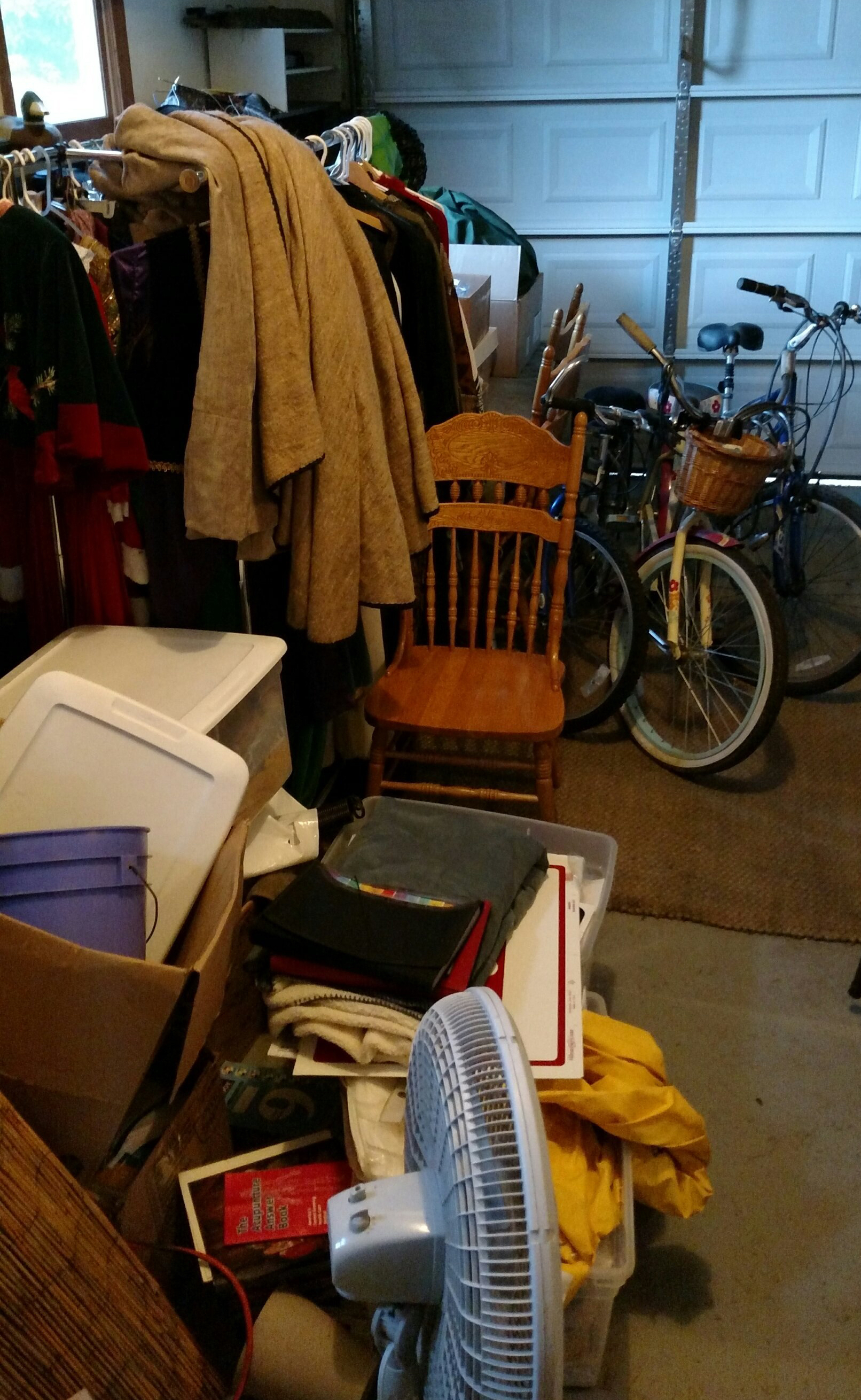
Where my car would go if there was room.
We have had two yard sales since September, in between storms. We sold lots of little stuff, nothing big or heavy, or “worth something.” Both times it was a lot of work. My feet and legs hurt for days afterwards. Each time, we found more stuff, so nothing seems to have moved. There are boxes, and boxes of odds and ends in our garage. Little room to walk or park a car. Bikes with flat tires, tools, blankets, leather, chairs, bits and pieces of dreams and intentions long dead and forgotten. The spiders love it. They have thrived in this musty, cardboard and plastic environment. We move their houses, and they build new ones overnight. They are resilient and don’t really care about our stuff. They just carry on, weaving their webs and laying eggs. I wish it was that easy for us humans.
Competition: Who needs it?
“Let go of Competition, Expectation and Judgment.” YogaFit mantra
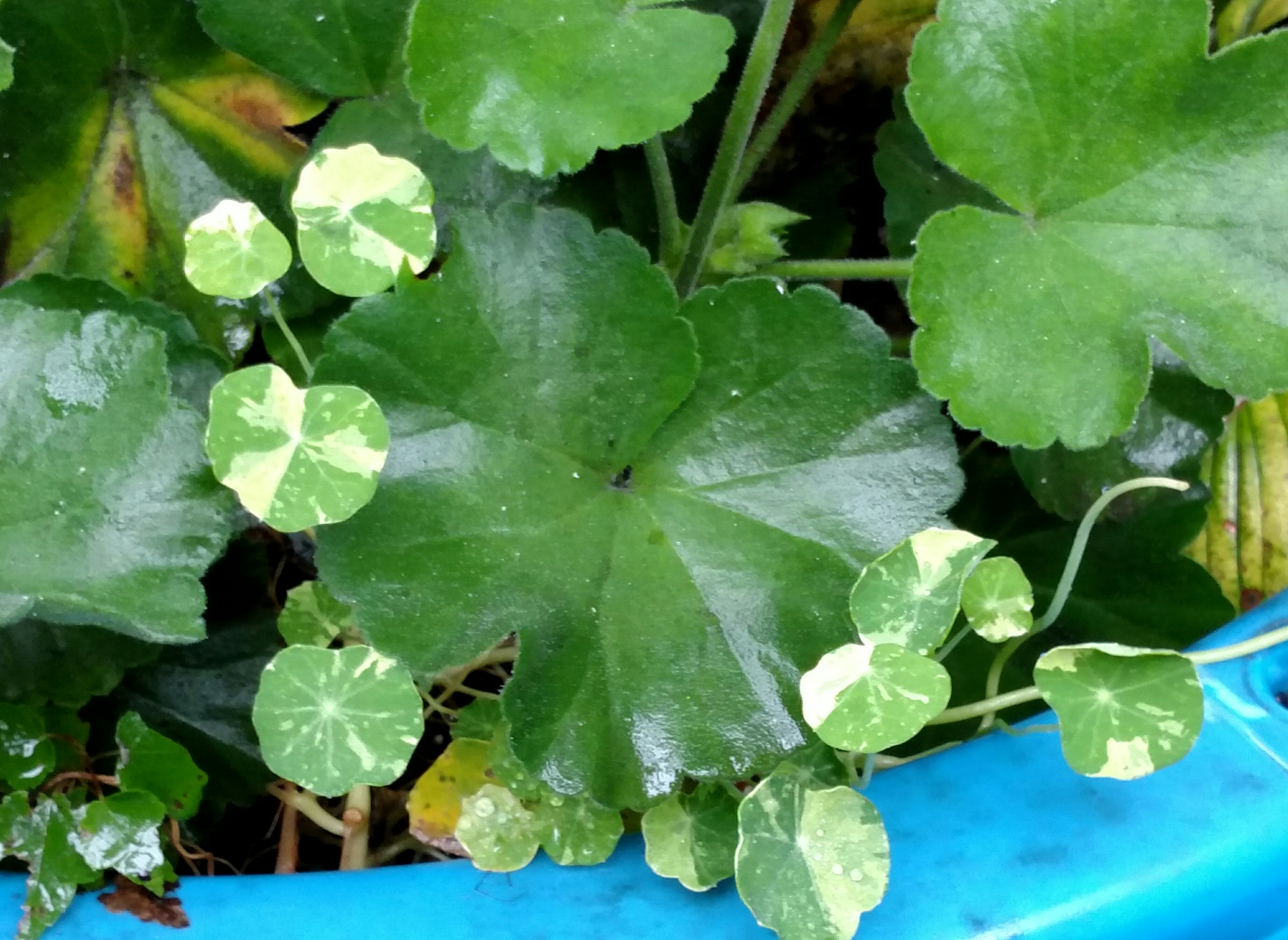
Competing for Space
This image looks peaceful and natural. but just beneath the surface, there is strong competition for food, water and space. Every gardener knows that plants are capable of invading when left unchecked. The most aggressive become the most prolific. Survival of the fittest is proven here. The same is true in the animal world. Competition is a necessary life skill. If you don’t compete, you will not survive. Is the same true for people? I’m not so sure.
For me, competition is not in my nature, at least not obviously. I usually refuse to compete. Not that I can’t stand losing, because I am just fine with that. I always admit when I’m wrong, or in over my head, or simply can’t do something. I’m just not a competitive person. Maybe because I have never had to be competitive. Oldest, only girl, no need to fight for my place in the family, I have always felt good enough. When I was in school I was happy with B’s, never needed A’s. When I got A’s, I wasn’t too impressed. My parents expected me to be strong, smart and mature. So I was.
When I started practicing yoga my lack of competition became more of a practice, less of a certainty. I recognized an emotional tightness when I was training and saw some young, thin woman doing a pose gracefully and without any hesitation or real effort. Of course, my thought was “Why can’t I do it like her?” I learned to let go of those kinds of thoughts. I didn’t put pressure on myself to look like her, or do it like she did. No problem. I don’t need to know how to do a perfect headstand, or an arm balance anyway. Giving up? Or setting boundaries? Just not interested.
So, I can truly say that competition is simply not an issue for me. I tell new students that yoga is not a competitive sport. “We all come in with different bodies and histories, and no one will ever be just like us. So, we must learn to listen to our own bodies and minds, and adapt our yoga practice to meet our needs, not the needs of the person next to us.”
No big deal. But some people simply can’t take that road easily. That’s why we call it a practice. We practice listening to our inner voice and physical sensations and re-teach ourselves how to find our center, over and over again. Sometimes, when the center is too far lost, judgment becomes the driving force.
And that is the next thing to let go…
Happiness, NOW

My collage this week shows some of the things that make me happy. Yoga, of course, flowers, of course, pure, unbridled laughter with my soulmate, near the ocean, of course, and an opened heart, pouring out love and compassion….
But sometimes that heart needs protection, and maybe a door to shut out the hard stuff. And there has been way too much hard stuff lately. And the door never completely closes, leaving gaps for everything wanted or unwanted to creep in.
The challenge is balance, and it is a day by day, minute by minute thing, usually accompanied by handfuls of angst and confusion. My job as a therapist, yoga/mindfulness instructor, creativity person puts me in a unique spot. I get to preach what I try to practice every day. But, as I remind my students and myself, it is a practice. None of us will ever be perfect at being present.
When you’ve practiced long enough, you realize that being present can be quite challenging. Sometimes we don’t want to be where we are, doing what we are doing. Sometimes the present moment is just too painful. That is the problem with being awake in the present. You get a taste of it all. The fresh air along with the sand and dust it kicks up, the cool feeling of iced tea on a hot day, along with the dry mouth afterwards, the soft baby’s skin along with its copious poops every two hours. It’s all there in your field of awareness when you are present, and at some point you realize, since the door doesn’t shut properly, you have to find a filter. We simply can’t be present every single moment. Our brains would implode.
And, because I am not a masochist, I choose to pay attention to the good stuff, like birds singing outside my window at 6 in the morning, or the way the dog rubs her head on the carpet while I’m petting her, or the smell of coffee, or the ever-changing sky. A nice day on the beach with my soulmate laughing at whatever happens to tickle us at the same time, or a simple sunset, quiet and humble in its beauty. Those things give me pleasure, joy, and enough moments of happiness to carry on when the hard stuff catches me off-guard.
So, today, what gives me joy is this: hearing the wind howling outside at 40-50 miles per hour while I sit in a “spare” room surrounded by my favorite things–yoga mat, bead projects, books, magazines and a full belly. It’s all in the perspective.
Time
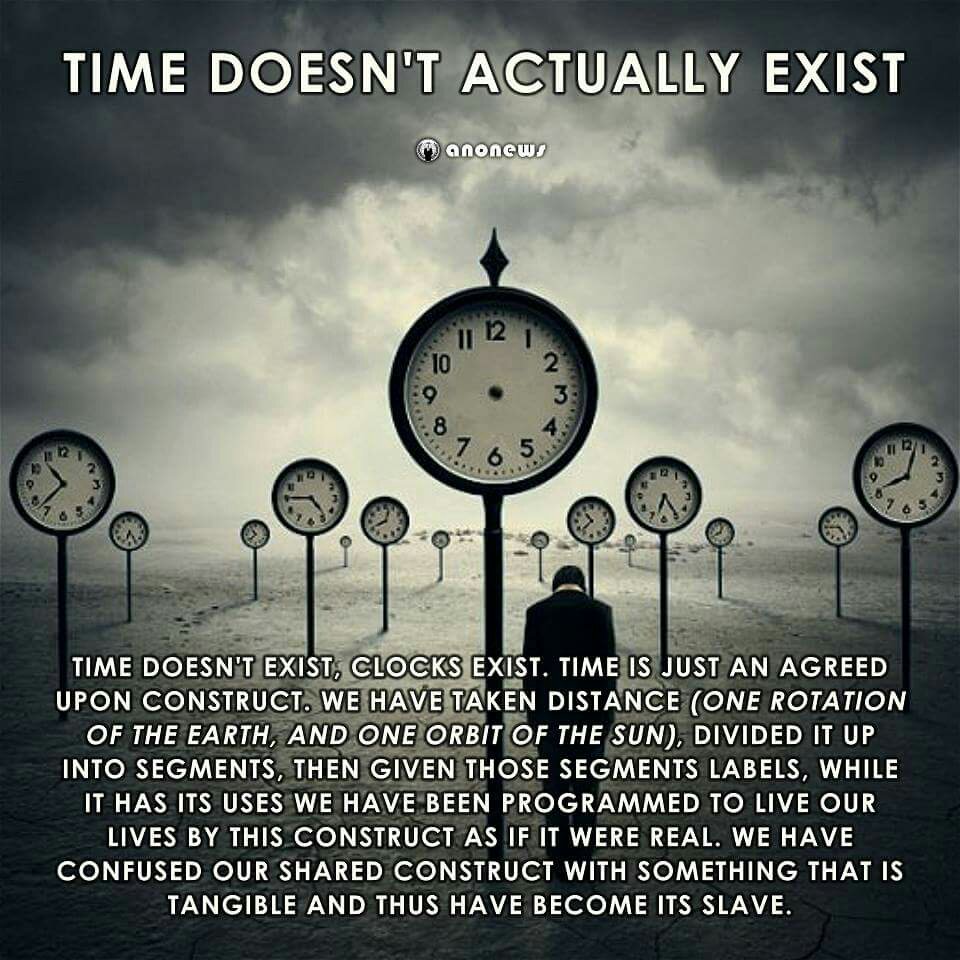
“Time doesn’t exist. Clocks exist. Time is just an agreed upon construct. We have taken distance (one rotation of the earth and one orbit of the sun) divided it up into segments, then given those segments labels. While it has its uses we have been programmed to live our lives by this construct as if it were real. We have confused our shared construct with something that is tangible and thus have become its slave.”
I borrowed this from Facebook. It triggered quite a bit of pondering. I like clocks and watches, and guessing how long something will take. I also like numbers, especially when the digital numbers are all the same, like 11:11 or 2:22. Sometimes I wake up in the middle of the night and guess what time it is. Usually I am within five minutes of the exact time. It’s a blessing and a curse, having a clock in your head.
Here’s a conversation I had with my brother on this subject:
ME: Sometimes I wonder exactly what it means to HAVE time. Really? All we HAVE is NOW. It is always NOW, no matter what the clock says. Yet, I, too, am a slave to the clock (and the calendar) someTIMES.
ME, later: This would be a good blog post.
BROTHER: Yes it would, if you have the TIME.
ME: I’ll find the TIME. But not NOW. Later.
And there’s the problem. Later. Not NOW.
Sigh.
Trees: Highways in the Sky

I have had a preoccupation with trees lately, especially since they are in their “naked” state. I love the structure and the intricacy of the branches. I often wonder what it would be like to live in a tree, to be a bird or a squirrel, branches for a highway or nesting place, breeze flowing through now and then, and no real solidity beneath my feet. How would that be for a feet on solid ground type of person.
I made a collage a few years ago with an image of a very tall, very rickety tree with a treehouse made of hundreds of sticks on top. I know it was at least 100 feet in the air, and a whole family lived there! They built their homes way up high to avoid the wild animals that came out at night. These people, somewhere in a remote part of Africa, were a part of that forest, sharing the treetops with other, less intrusive climbing animals. It was frightening and exhilarating to imagine living up there.
But that was as far as I got. Imagining. I used to climb trees when was young. No problem. But now, now that I’m older, wiser, and less adventurous, I’ll just be happy with my perch on the back deck, in my chair, looking up and wondering how it would be….
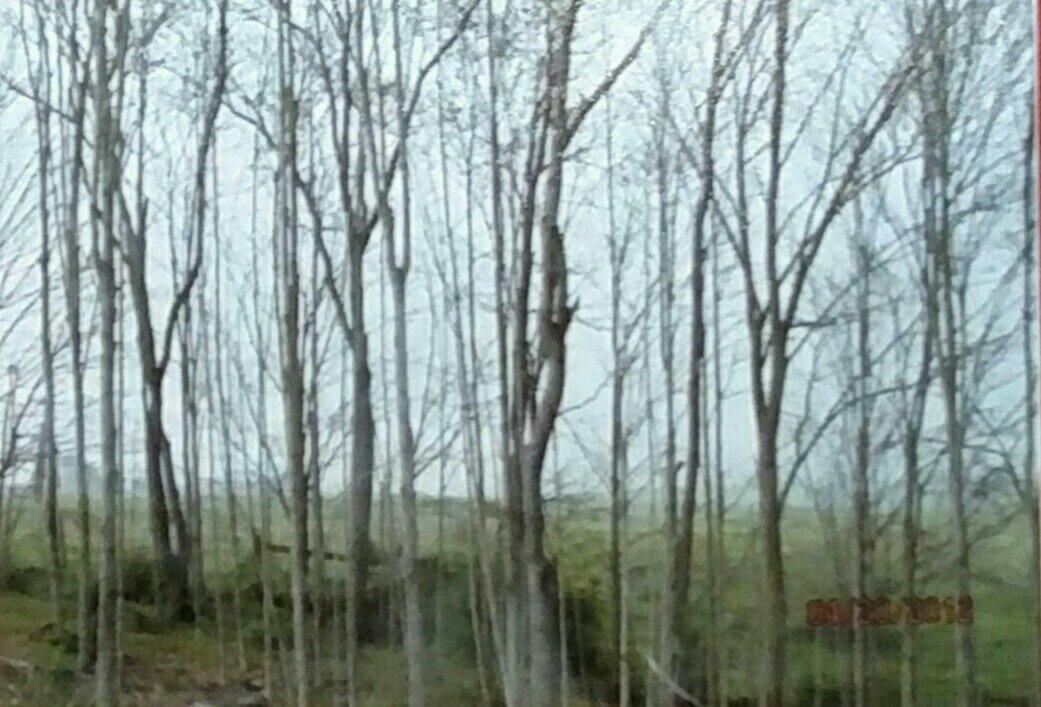

 on the road to simplicity