New Orleans, or, as the locals say, “Nwaulins”
*****
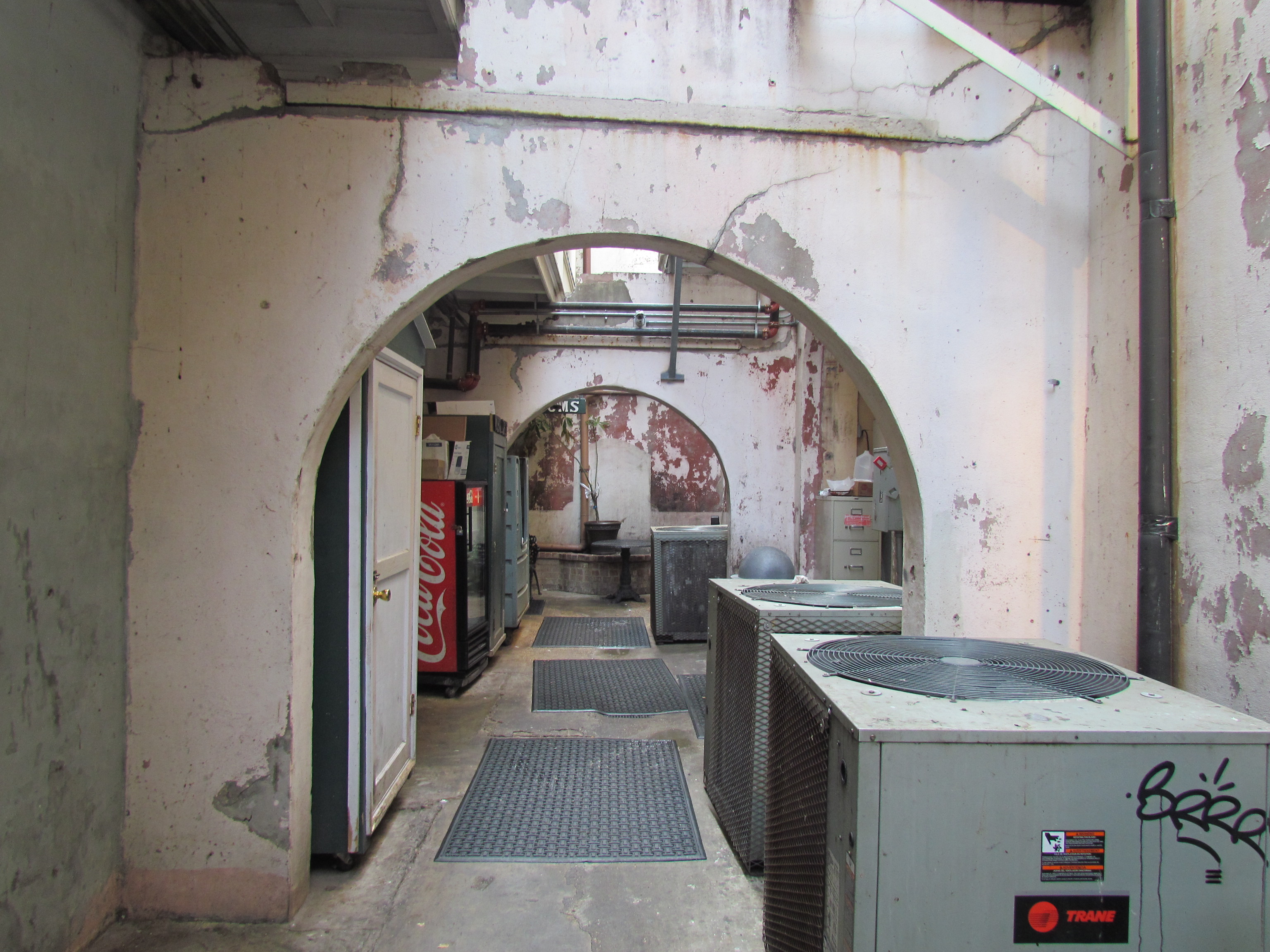
the bathroom is back there, somewhere…
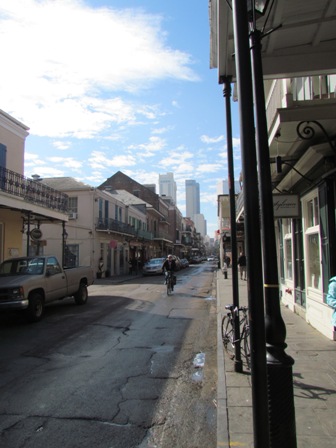
Broken Road
*****

unusually vacant street
I had mixed feelings about visiting New Orleans. I’m not a party kind of person. I could care less about Mardi Gras and I had heard, and seen on tv, how grungy this town was. Well, it was…grungy, that is. But, even after Katrina, who can go to “Nwaulins” and leave uninspired?

a little over-done?
I’ll get to the French Quarter in my next post. But now, I want to say something about what made New Orleans what it is today. Sugar. Also, rice and crawfish, but mostly sugar.
Remember that picture of the canal going through Port Arthur a couple posts ago? The one with the smoke on the horizon? Well they were burning what was left of the sugar cane fields in preparation for rice. In a few months the fields will flood, the rice will be harvested, and next they will “grow” crawfish. Over and over again, every single year. Just a little fact that I didn’t know before asking a few questions. Sugar, rice and crawfish. No wonder New Orleans is known for its restaurants. But, back to the plantation…
*****
The Laura Plantation
We looked at all the options and decided to spend our meager bit of money on a plantation tour. We chose the Laura Plantation. This is the only true Creole plantation in the whole bunch of them. I had grand visions of something white and expansive, with ancient oaks lining the half mile long driveway. Well, that was the neighbor. The Laura Plantation is much more understated. I immediately liked it.

Laura Plantation main house

front porch

afternoon tea?
There’s a long, convoluted story about this family and how they ended up running this plantation. If you’re interested, here’s a good website: http://www.lauraplantation.com/sugar.asp Plus, Laura wrote a book about it called, “Memories of the Old Plantation Home.”
Basically, as a young woman, Laura’s mother, Elizabeth was required to run the plantation since no one else in the family was capable. She did not want to do this, but had no other choice. She became bitter, and mean, and ended up running the place with an iron fist. Here is where she retired:

I’m sure in its day, this was quite a nice place to sit back and gaze out over your kingdom.
Laura was affected by her mother’s lack of compassion, so she softened her style once it was time for her to take over. The place was run by women, Creole women. Creoles are a blend of West African, European and Native American cultures. The Creoles had a habit of isolating themselves from the rest of “Americans,” who, at that time were really just transplanted Europeans.
It was a multi-cultural, gender neutral environment. Still, there were slaves. In fact, it was the slaves who built the main house and all the out buildings. Here are a few of the remains of their handiwork:

The main house was made from old cypress, which is super hard and long lasting. Unfortunately, it is also extinct now.

slave house. made for a family of four, but sometimes housed twice that number.

under the porch of the main house

cookhouse. This is where everyone came to eat at lunchtime.

Storage compartment
As some point they started making wine and became one of the most productive wine makers in the south. The place is decorated with old wine bottles. I love the idea of using something over and over again. But I can’t imagine drinking enough wine to do this:

vine bed bordered by old wine bottles
Or this…

wine bottle star tree border
*****
A week or so after taking this tour, we went to see “Twelve Years a Slave.” What an eye-opener. I felt deep sadness for everyone who lived during that ugly time in American history. There simply were no good choices. And all for the love of sugar!
*****
Beaumont and Port Arthur, Texas
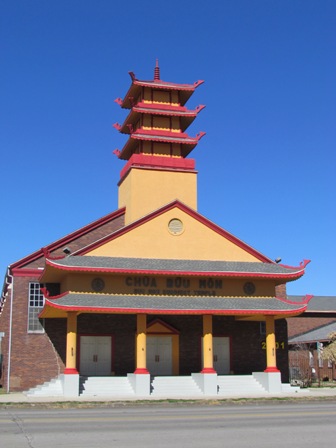
Buu Mon Buddhist temple
I learned a trick when we were in Tuscon. Once you get settled in to a place, go online and google “Things to do in…” wherever you are. Wish I would’ve thought of that about two weeks ago. Anyway, knowing that we’d be staying in Beaumont, TX for two days, I decided to see what the local attractions were. Not much. But wait. The Buu Mon Buddhist Temple, “world renowned” for its lotus gardens was just 20 minutes away in Port Arthur. What? Really? A Buddhist temple in Texas. I hadn’t seen one of those since, well, California. I got excited. I decided that was all I really wanted to do in Beaumont. But expectations have a way of catching you offguard.
The monastery was closed up tight. No sign of life, and since it is winter, no lotus gardens in view. We walked around it, peering in through the spaces in the fence and realized we probably should have called to arrange an official tour. I later found out that this monastery used to be a Baptist church, then a Vietnamese Catholic church, and in 1986 became a Buddhist monastery. Basically what they do other than lotus gardening, is offer lectures on Theravada Buddhism twice a week and a meditation group once a week. They boast that they are seeing many more non-Vietnamese practitioners. Maybe it’s a result of the constant threat of hurricanes that guide people to a peaceful place like this.
Port Arthur
Port Arthur has been called “Hurricane City.” It has been hit by five hurricanes since 2005. It is surrounded by sugar and oil refineries. The “downtown” looks like a modern ghost town, except for the small community college that dominates. For at least three miles there is nothing but abandoned buildings, many of them former bars. We drove around the town center and this is what we saw:

block after block for at least three miles
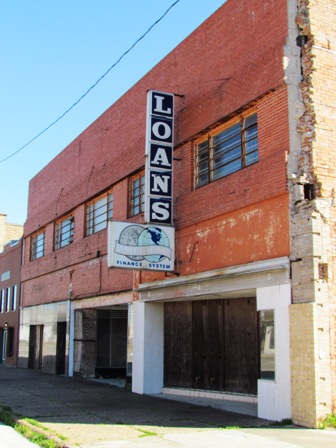
no more loans

abandoned firestone building

The Wall Street Club
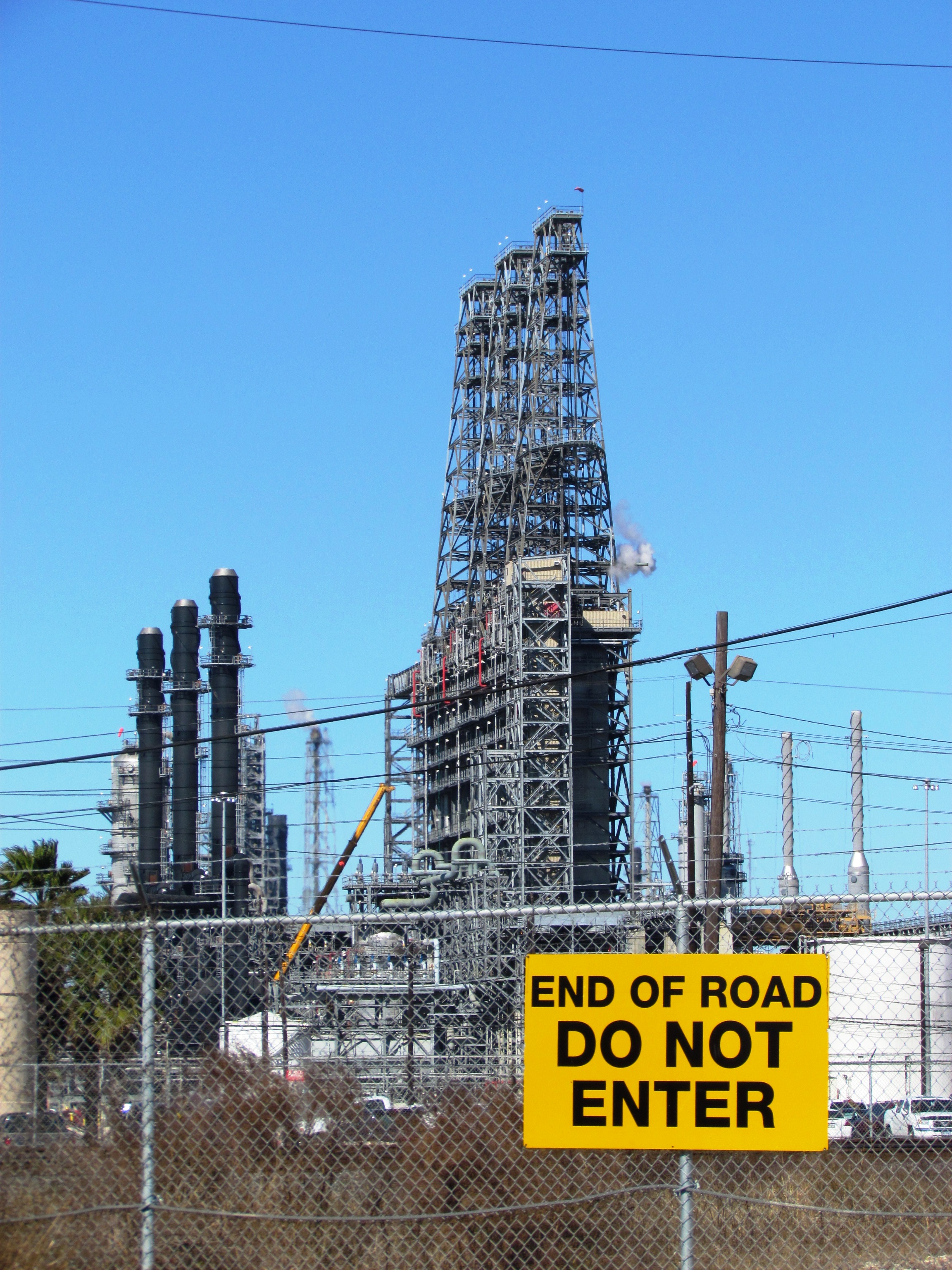
oil refinery
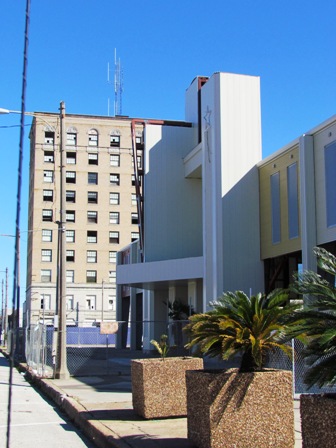
abandoned apartment building
We drove through a neighborhood, pretty much in shock at the devastation. The only people we saw were involved in cleaning up and rebuilding, slowly. I wanted to stop and talk to them, but felt like it would be intrusive. So we just drove by, nodding our heads and wishing for the best.
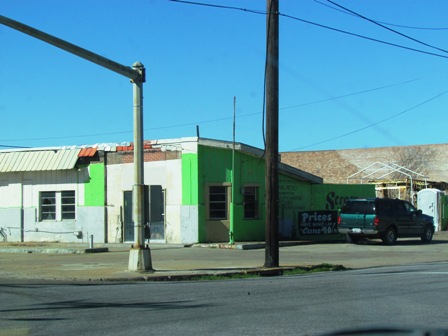
wants to be lime green one day
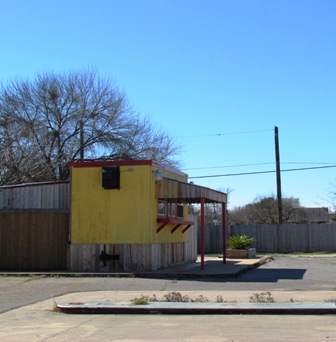
nothing left
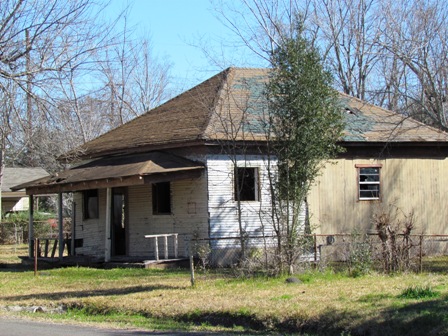
no home any more
The ever-present canal
Having lived in a town that was devastated by a tsunami, we recognized the hoplessness of the situation and decided to move on. We knew there was an intracoastal waterway nearby and the dogs needed to get out for a walk. All along the Gulf there are these mounded hills that stretch out as far as the eye can see. They are designed to keep the water from flooding into the towns. It’s a nice place to walk, and it was so nice to finally see a large body of water.
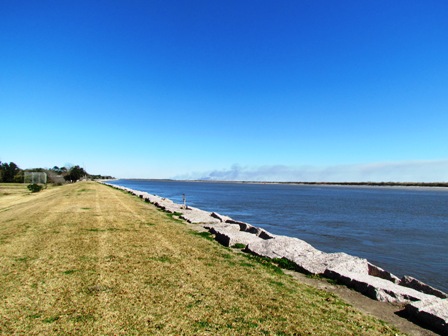
waterway. notice the smoke on the horizon. I’ll talk about that in my next post.
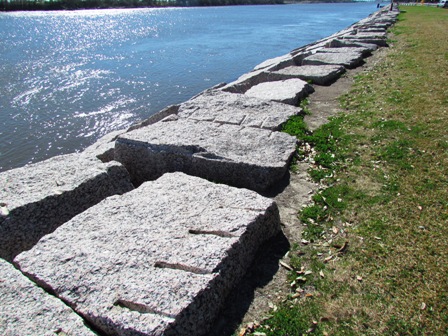
granite retaining wall
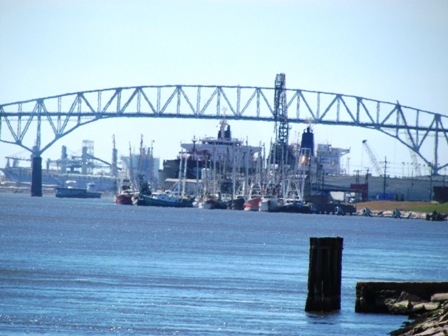
under the bridge
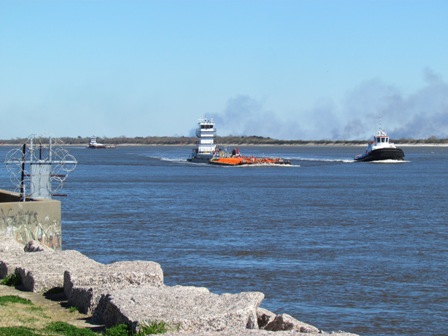
tugboats
We left Port Arthur feeling a little off balance. So far on this trip we have been able to navigate around the pain and suffering of every day people. Maybe it was time for us to stop being tourists and start being ourselves again. This is one of the gifts of traveling. You learn to really see what you are looking at. Mark Twain said this: “Travel is fatal to prejudice, bigotry and narrow-mindedness.” It also opens your heart and gives you a lesson in compassion.
San Antonio’s prettier side
Riverwalk
We knew we wanted to do this one thing: stroll down the riverwalk. It is a network of walkways that wind around the San Antonio River, which happens to feature the city’s best hotels, bars and shops. You can take a paddleboat tour, or just walk, and walk, and walk. It has to be one of the most photographic journies we’ve taken lately. Here are a few of the images that capture the place:

going under the bridge
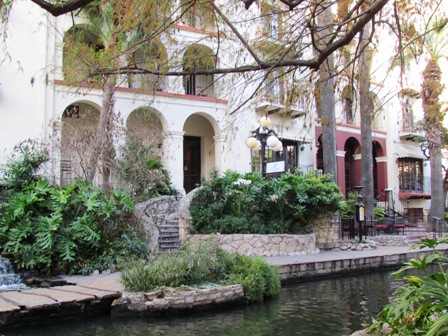
grand entrance…or exit?
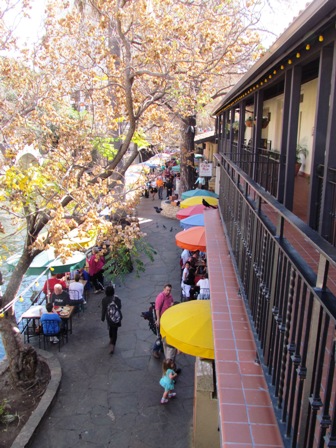
view from above
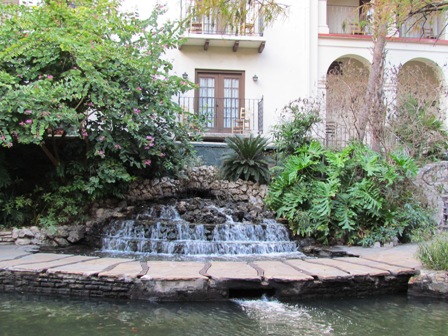
water feature to die for
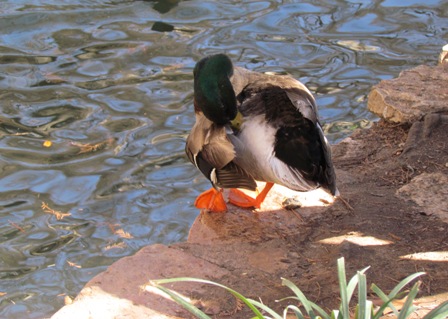
unaffected duck
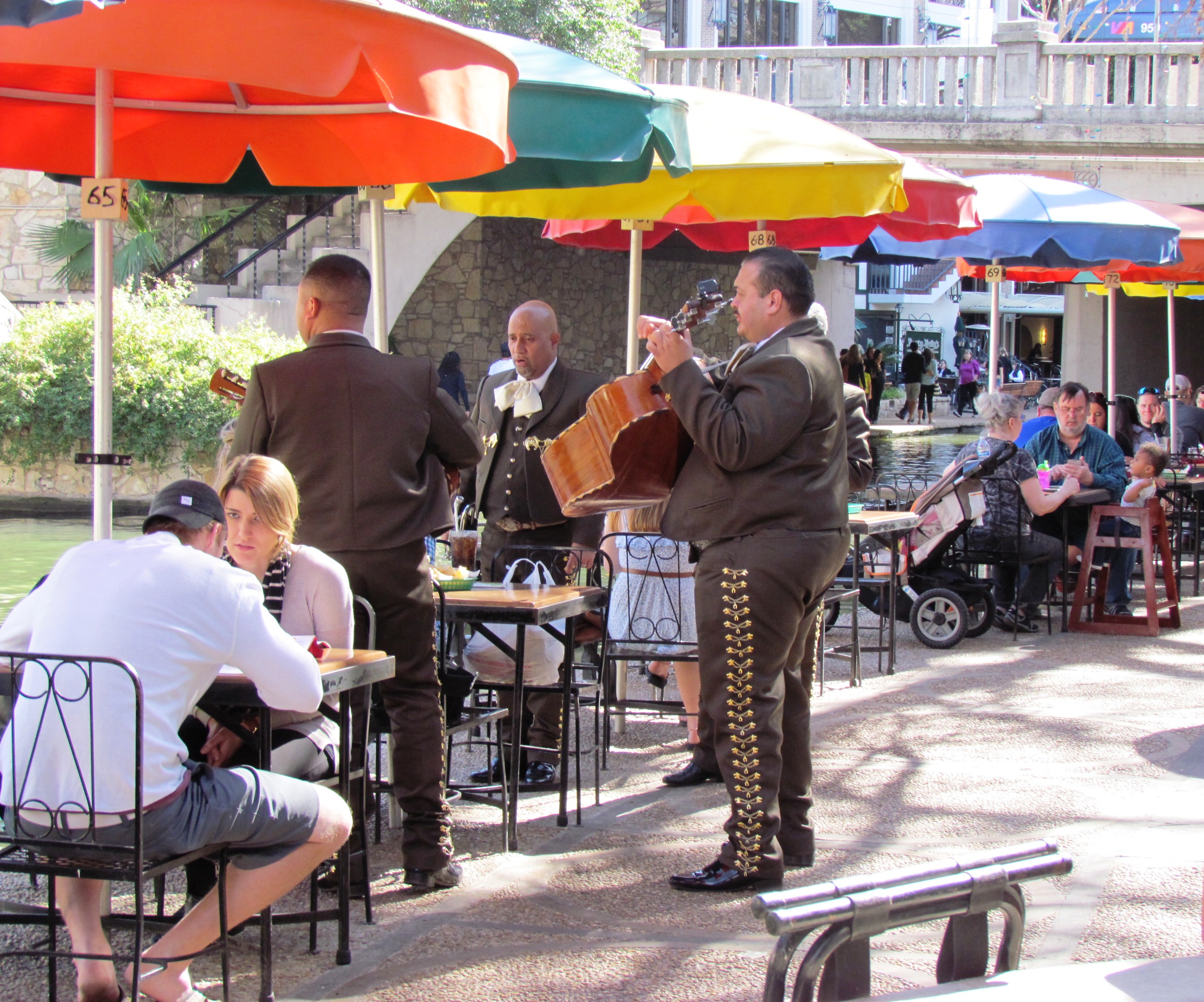
mariachi band serenading a family
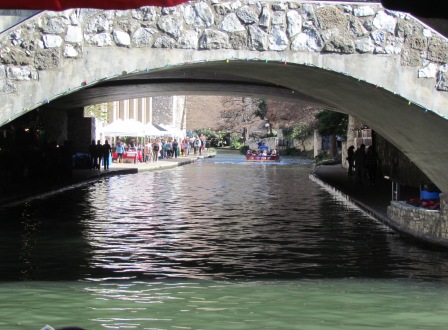
view under the bridge
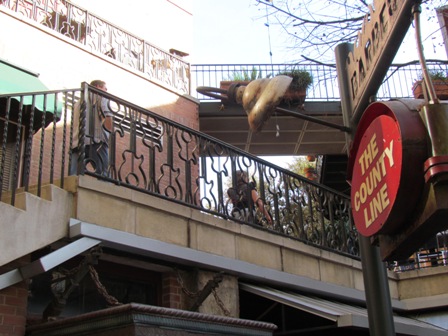
guitar railing
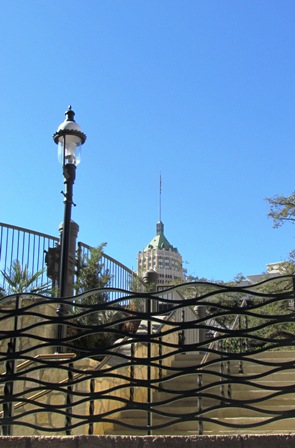
wavy ironwork
Historic homes
Having grown up in the south near places like Savannah and Charleston, I have seen my share of beautiful 18th and 19th century houses. San Antonio didn’t disappoint in this department. Oppulence abounds here too.
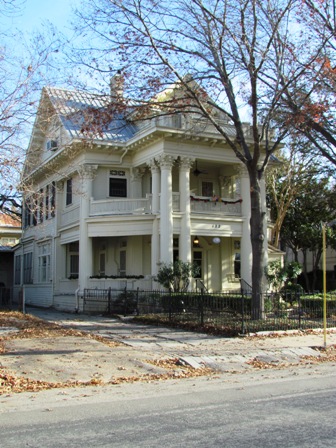
white and lacy
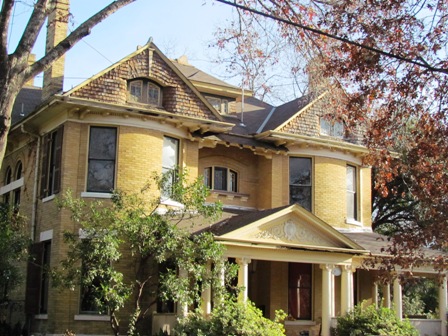
yellow queen
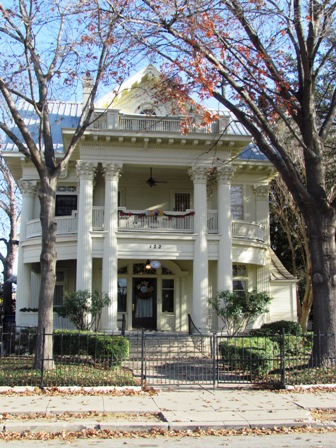
just another pretty southern lady
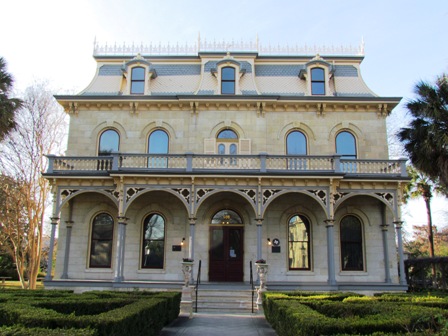
house at the end of the street
There were so many more, but we simply ran out of time and had to stop taking pictures. Still, it was nice wandering, and wondering about the people who lived there a hundred years ago. How did they make their money? Was it oil and cattle like it is today in Texas? What were their daily routines and how did they really live? Were they happy? Or did they live in fear of losing what they had worked so hard to acquire? I wonder about this every time I drive through an historic neighborhood. But mostly I just appreciate the artistic effort required to create something so grand and beautiful. Every now and then I dream about living in one, but only for a minute or two.
San Antonio: A tourist’s dream town
San Antonio seems like the epitome of a southwest town. It’s history centers around battles for land,and all that lay beneath, and around missionaries coming in to “save” the locals from….I’m not sure what. That aside, San Antonio is a visual treat for the eyes. We especially enjoyed the architecture, in particular the iron work.
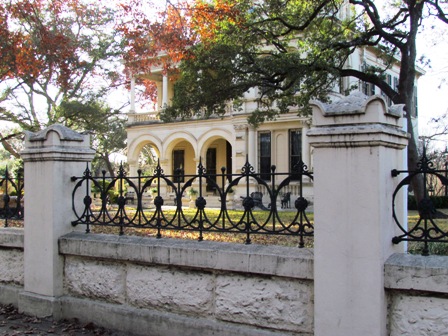
just one example of the amazing iron work we saw here.
The first thing that attracted our attention was Mission San Jose. It is a mission with a working church, but from the outside it lookes like a fortress. In fact, it was fortified with thick stone walls and holes for guns, just in case those pesky French decided to try to take some of the land, or corrupt the natives.

front view
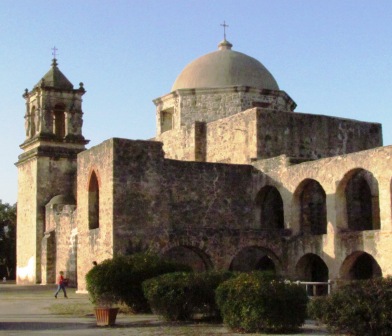
side view
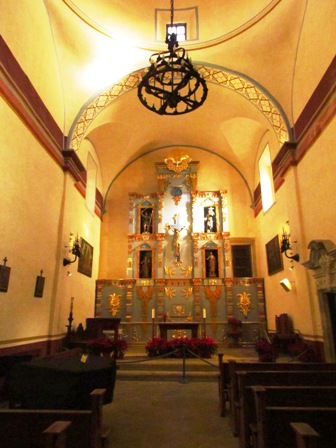
inside view
There’s a lot more I could say about this–“saving” the natives, etc.–but I’ll keep that to myself for now. Let’s just say the place was huge, and fortified and the natives lived in relative squalor compared to the saviors. Like Forrest Gump, that’s all I got ta say ’bout that!
Moving on…
The Alamo is supposedly a “must-see” when you’re in San Antonio. Well, don’t get your hopes up. It’s a small mission/fortress in the middle of town that is dwarfed by its modern neighbors.
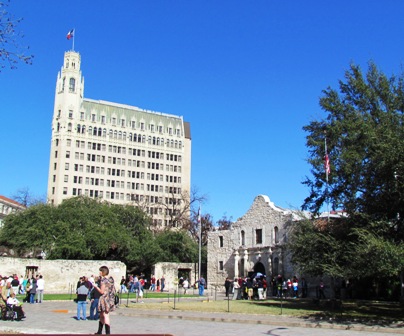
The Alamo
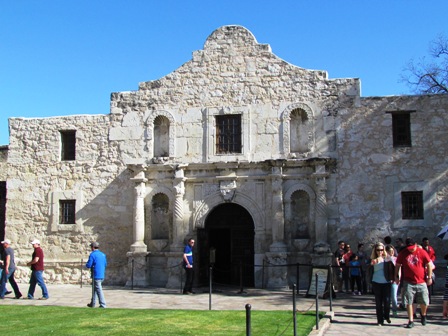
Close up
The Alamo got caught up in the Texas Revolution where a lot of transplanted Europeans (Texians) died because the native Mexicans outsmarted them. It’s a nice building, and attracts hundreds of people every day. Again, peace lover that I am, I could say a lot more, but I’ll plead the Forrest Gump amendment and say no more.
I’d rather get on to prettier things, like the old houses and the new Riverwalk…in my next post.
Another one nighter, Ft. Stockton, TX
After a long day of driving through miles and miles of this:

Over every hill,…
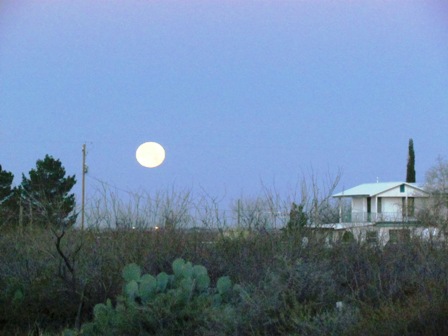
…we landed at Ft. Stockton RV park, right off the highway. You wouldn’t know it though. This place had a character all its own. I forgot about driving for the night and let myself soak in the idea of being in Texas. This little campground practically oozed Texas. My first image was of the moon rising across the field, barely visible behind the clouds:

Moon behind the clouds
And then there was all the garden art. I felt a strong sense of creativity here, as if people delighted in making things. My kind of people!

Horseshoes, cowboys and stars. What says Texas more than this?
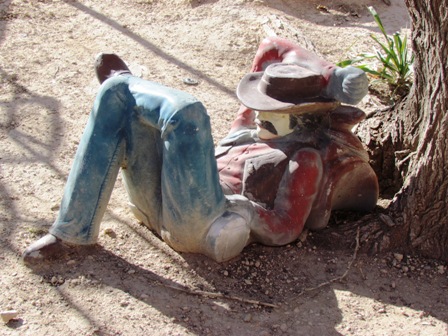
pooped out cowboy

Spare parts used for, what else? A porch swing!
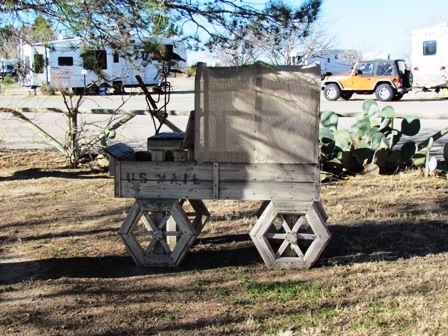
Mail truck. Look at those wheels!

wire cowboys
On the morning before we left, Sam got this picture of that very same moon setting over the field in front of us:
Still big, but way more visible
So began our long journey through Texas. Not what I expected, but then, it never is.
On to San Antonio…
Leaving Arizona and all those cacti behind
From Apache Junction we drove to Las Cruces, New Mexico, just a 3 1/2 hour drive. I expected desert, and maybe some grassland….
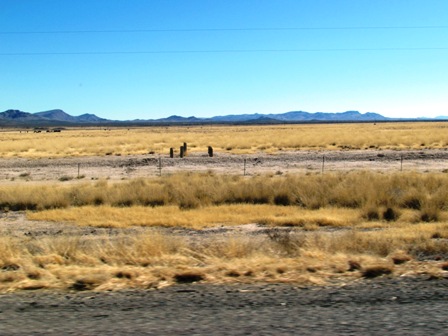
The sand and gravel turned into grassland pretty quickly…lots of it.
but only ten miles down the road, there was a rest stop with these dramatic rocks:
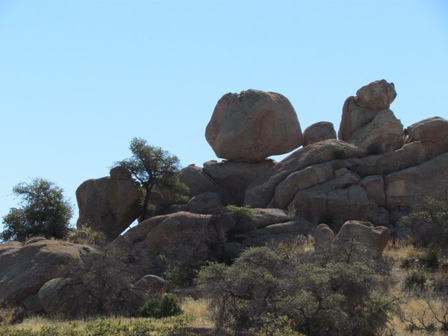
Looks like someone carefully placed that rock on top of those other rocks, doesn’t it?

See the RV? That rock hill is BIG!!
Highway 10 runs through the southernmost parts of Arizona and New Mexico before turning south at Las Cruces, NM, toward the vastness of Texas. This whole area is dominated by scrub brush and scraggly palm trees with small non-descript groups of mountains here and there on the horizon. Not much to look at. But suddenly at the bottom of one of those little bumps in the distance was a sprawling town–Las Cruces.
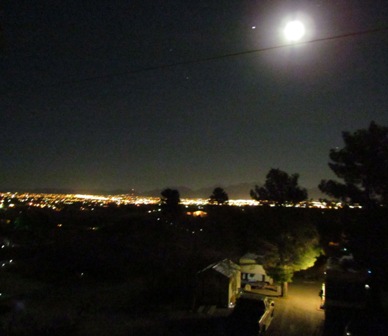
Las Cruces skyline from the KOA hilltop.
It was a one night stay there, but this view mesmerized us for the few hours we had there.
Then it was on to that big state with a big reputation–Texas. Just after entering Texas I saw a sign that said “Beaumont 849.” I thought it was a joke. It wasn’t. Texas is that big from west to east. Here’s what I looked at for two whole days until we arrived in San Antonio:
Mile…
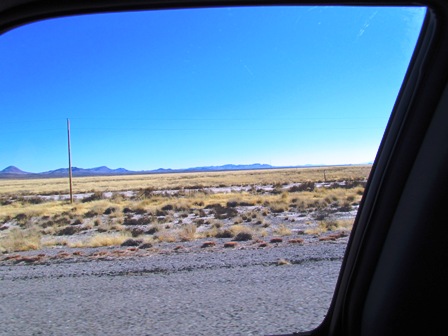
after mile…

after mile…
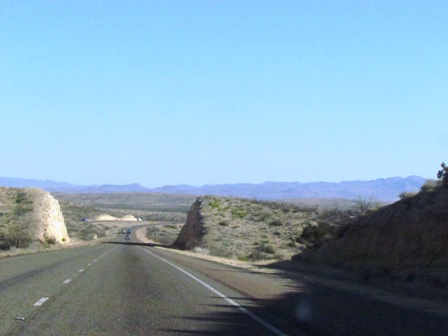
after mile…

after mile.
The ONLY good thing about this part of the trip is that the speed limit was 80 miles per hour, and believe me, you really wanted to go that fast! But San Antonio would prove to be a worthy prize for all that boring, dusty, dirty air highway through nothingness. However, I would not want to do it again. I’d rather scratch my eyeballs out!
Raptors and Groundhogs: Natural Entertainers
The main event on this day, and every day, was the raptor show. It was held outside, down the hill on the side of the mountain. There were about 150 people gathered around, cameras and cell phones in hand. But soon, most were simply standing and looking up with mouths wide open. It’s hard to capture a predatory bird when it’s spotted food.
Here are a few photos we managed to get:

falcon
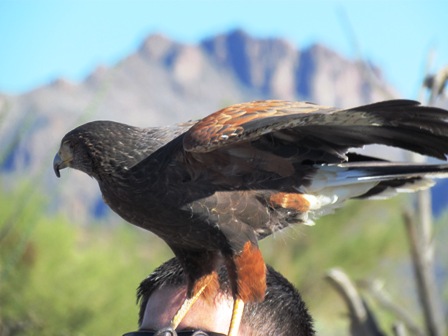
hawk
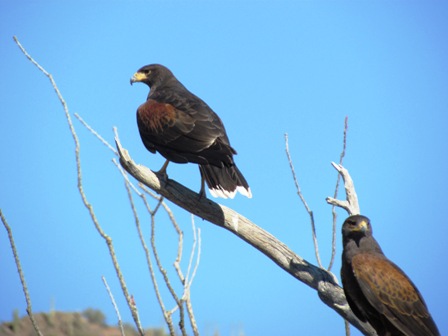
two hawks
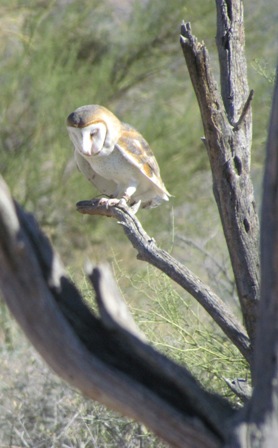
owl
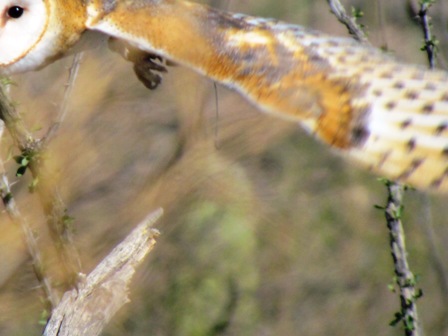
owl in flight
After that we were pretty tired, but continued on to see the rest of the animal kingdom. But the show stopper was the groundhogs. We happened to be there right at feeding time. They moved together in syncronisity. It reminded me of that show on Animal Planet called Meercat Manor. These guys were just adorable, and all they were doing was eating.
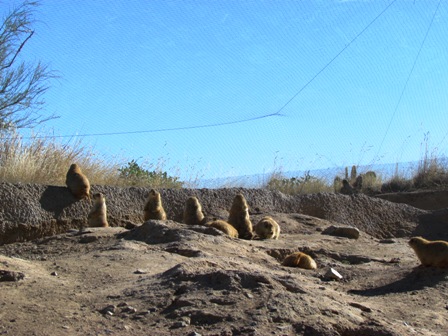
Groundhogs at attention.
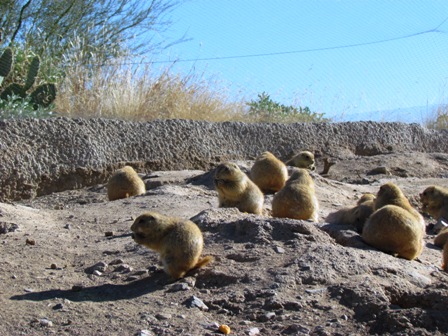
Yay! It’s time to eat!

Gotta fatten up. Gotta fatten up. Gotta fatten up.
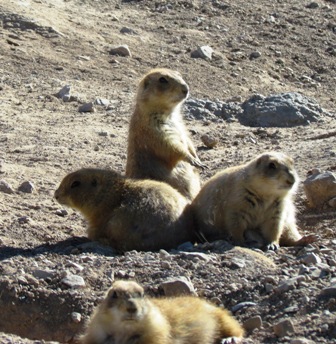
What? What’s going on out here?
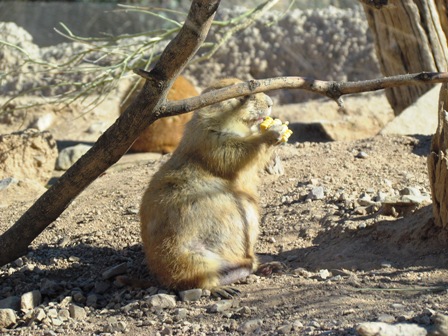
Yum. Corn.
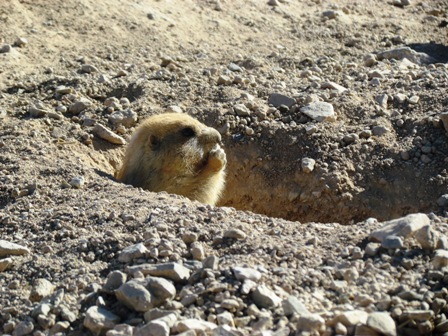
Yeah. I got my stash and nobody’s botherin me!
My one wish for this part of the trip was to see a botanical garden. Well that wish was fulfilled with added delight. I can now say I’ve been IN the desert. And it’s way more than just sand and sage brush!
Arizona Sonora Desert Museum: Immersion in the desert landscape
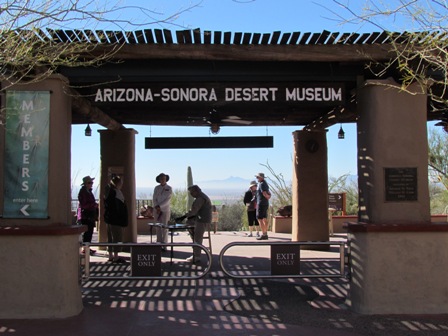
We spent an entire day at this museum, which is 80% outside. In fact, the only thing we did inside was eat lunch. It is located in the Saguaro National Forest about 20 miles from Tuscon. The roads are rough and windy and you are surrounded by cactus filled hills. You are truly immersed in the desert here.
The first thing we saw was the hummingbird house. The hummingbirds flew around us as if we weren’t even there. They had business to attend to…like incubating chicks:
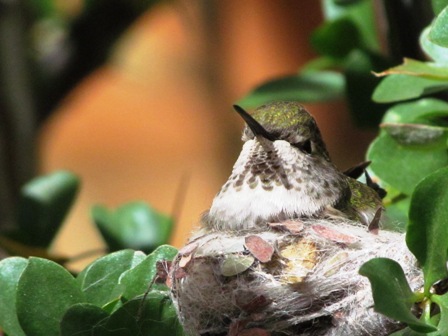
A nest that would fit in the palm of your hand. She posed like this for several minutes.
Drinking from the local fountain:
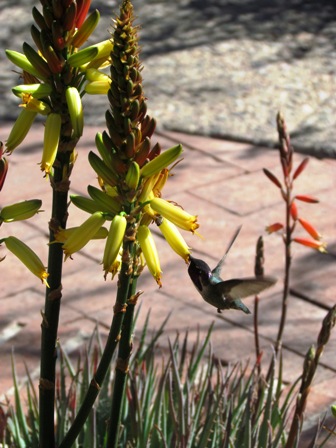
My own personal nectar fountain.
Or just sitting on a branch looking pretty:
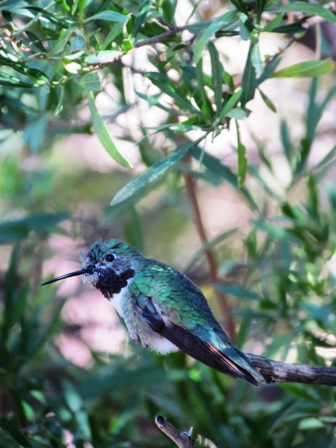
Yes. I know I’m beautiful.
As we wandered around we saw so many types of cacti that I almost started memorizing their names.
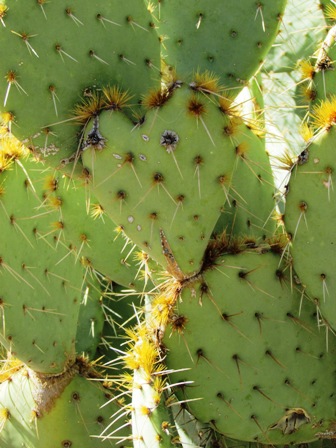
heart shaped prickly pear
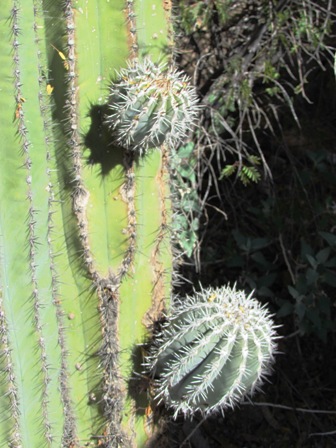
Saguaro with babies
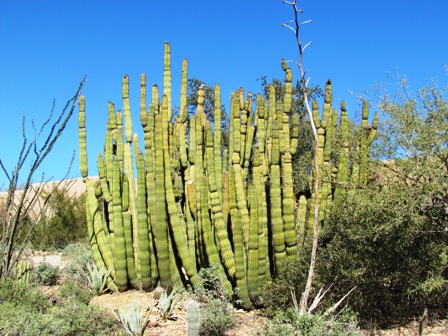
organ pipe cactus
But then I started making up my own names:
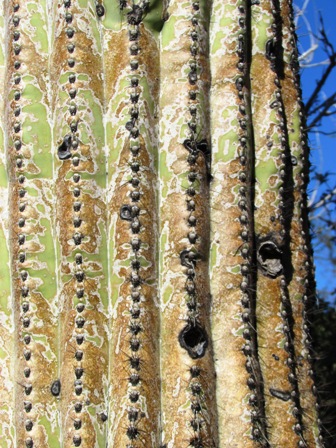
old timer
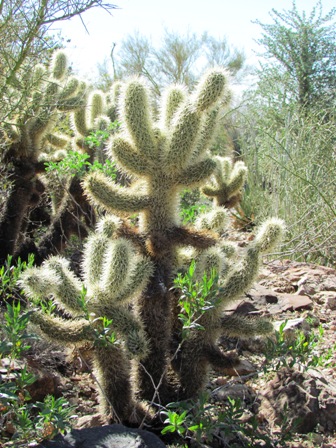
furry arms cactus
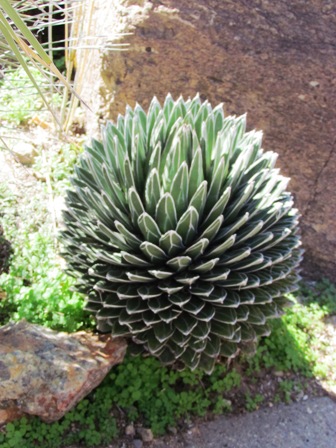
big pine cone cactus
And this next one is my favorite:
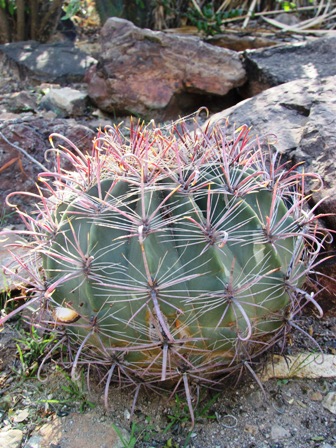
frilly girl cactus
We saw all of this within the first 30 minutes! There’s more but I think I want to give them a post all their own.
Exploring Tuscon in a day
Last Sunday we were in Benson AZ, just outside of Tuscon. We decided to go explore…without eating first. That is always a mistake. We ended up in a part of town that only seemed to have Mexican food. Every single restaurant was Mexican and they all said they were the best. We didn’t want Mexican that day so we kept driving. But after about 45 minutes of nothing but Mexican, we decided to just pick the next one. Here it is:
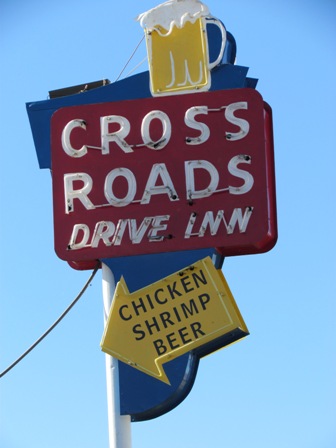
Just one of hundreds of Mexican restaurants on the outskirts of Tuscon
We didn’t see this sign until after we had visited. Pairing chicken and shrimp with beer should have given us a clue. But once inside, I didn’t see one person overdoing the beer part. It seemed to be all about the food and we were very hungry!
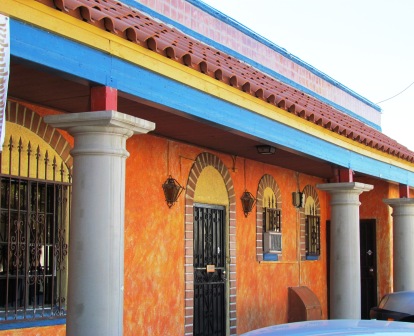
With such a colorful outside, how could we go wrong?
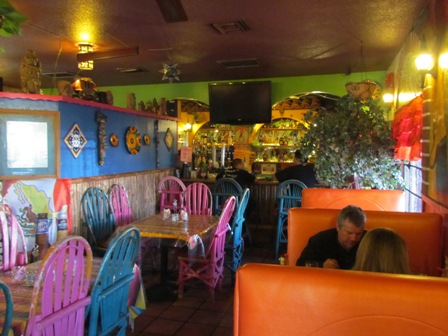
So much color!
The inside was just as colorful.
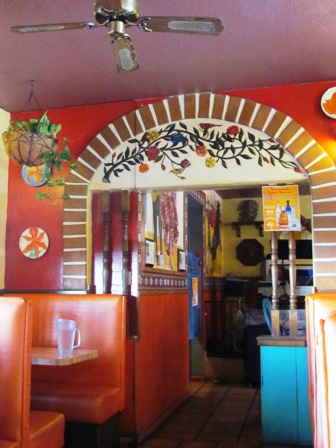
Entrance into the party rooms.
I love this doorway. It went into a room with a DJ who was blasting happy music all over the place. He was dancing in his chair. It was all very loud and rambunctious.
And the walls were covered with pictures like this:
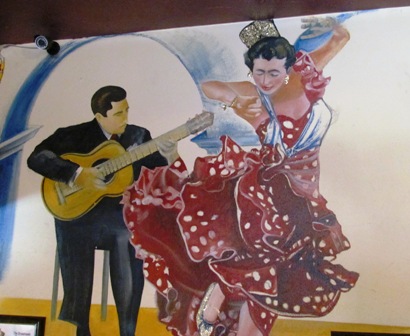
This picture depicts the energy throughout this restaurant: exhuberant!
I mean COVERED. There was so much to look at and listen to and smell and taste. An explosion of sensory input.
This was indeed authentic, perhaps the best. The food was absolutely THE BEST Mexican food I’ve ever had. The tortillas were homemade. Have you ever had real homemade tortillas? Amazing. Nothing like the ones you get in the store. I imagined someone’s grandma back there in the kitchen mixing and grilling away.
So, it was loud, and boisterous and colorful and….well, very filling. I ate too much and suffered for it later that day.
But that didn’t stop me from continuing to explore Tuscon.
An old mining town lives on
One of the local attractions in Apache Junction, AZ was The Lost Dutchman’s Mine. This is considered to be a “lost mine”, but the primary story is that the “Dutchman” kept it secret then he, himself disappeared. In any case, today it is said to be right here by those who want some of that easy tourist gold! It appeared to be a real, old mine and was spread out across three or four miles beneath the craggy Superstition Mountains. The buildings were authentic, old wood floors, huge beams, dusty roads, and a trip down into the actual mine…if you’re not claustrophobic and want to spend the money. We decided to stay above ground and just enjoy what was left of the town.
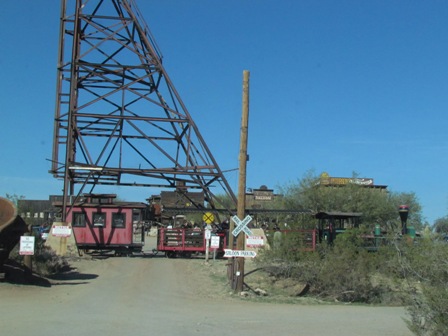
Entrance to what used to be a busy gold mine.
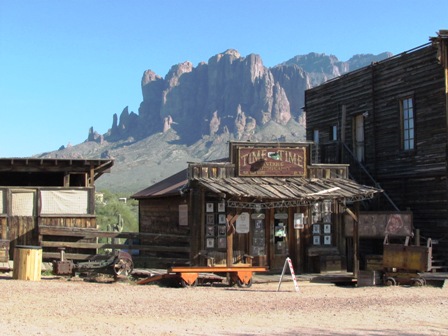
Mining town in the shadow of Superstition Mountains.
When you’re in a tourist trap, beware and take advantage of anything that is free, like wandering around imagining how life used to be in the good old gold rush days. Here’s some of what we saw:
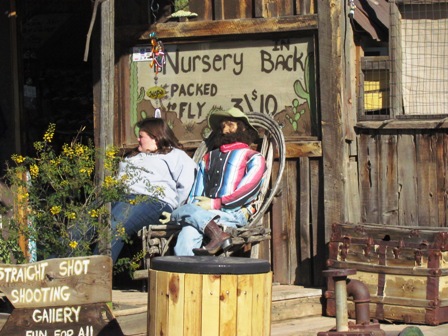
Customers? What customers?
This girl was selling little cactus arrangements in southwest style pots. I almost bought one from her, but she was pretty busy talking to her friend, so I decided she didn’t really want to sell me anything after all.
But there was a very talented blacksmith right across the street.
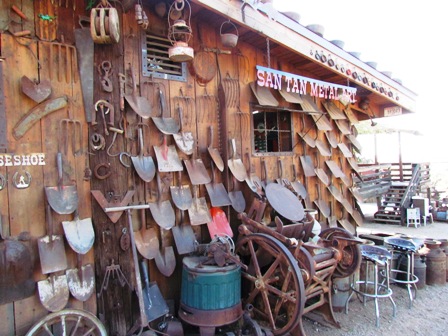
Every miner needs a good shovel.
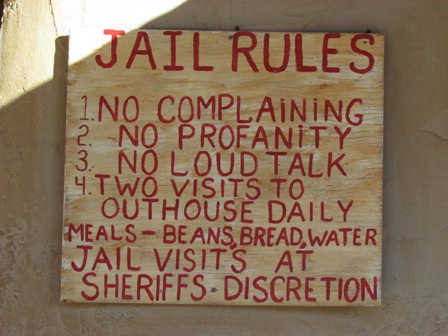
And every mining town needs a jail. Just be aware of the strict rules, OK?
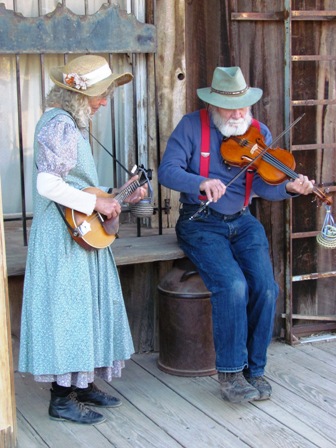
Yes. They’re real and they played real old timey, boot stompin music.
*****
The church was the focal point once you got inside the “town.” It sat at the top of the hill and at the end of the “street.”
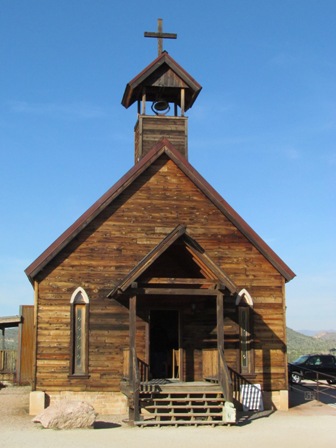
The most serene building in town…the church.
Right next door was the Bordello. I have to say it was the most beautiful building I had seen in the Arizona desert. We took several pictures of it.
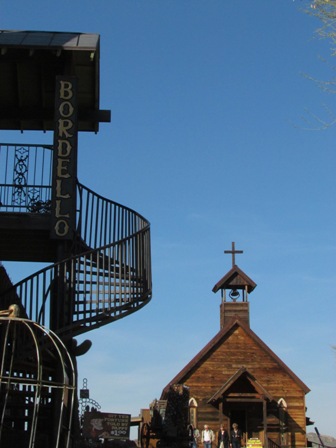
Bordello and church side by side.
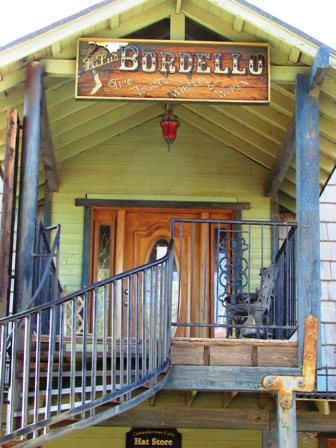
Sign says, “Fine Tobacco, Whiskey and Women.” Well now! Is there anything else you might need, sir?
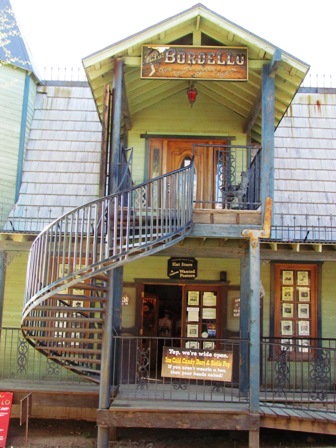
Who wouldn’t want to walk up those stairs?

Just in case you want some privacy, there’s a nice back door too.
Or, you might just want to take a bath!
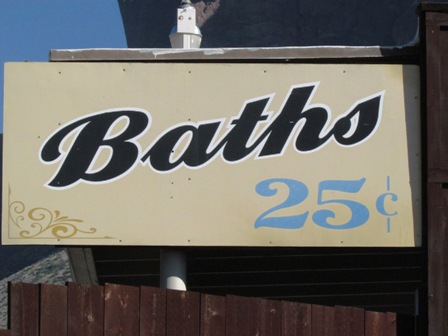
Best deal in town! Sorry, no jacuzzis.

 on the road to simplicity